One workspace for software and data quality
UI, API and database testing, AI-assisted authoring and repair, lineage, and release gates, in a single platform your engineers and leaders share. From user click to database commit.
Quality lives in too many places to give a clear answer
Scattered tools
UI tests, API tests, data checks and BI reports each sit in a separate tool with its own results.
Data gets missed
Apps pass their tests while orphan rows and mismatched totals reach the warehouse and the reports.
Brittle automation
A renamed button breaks a suite overnight, and engineers spend the morning finding and fixing locators.
Gut-feel releases
Go/no-go is argued from spreadsheets and chat threads instead of one shared, explainable signal.
Five capability areas, one shared data model
A failing data check, the defect raised for it, the reports downstream and the release gate all refer to the same objects, so nothing is reconciled by hand.
Test automation
- Test cases & suites
- Reusable steps
- AI test generation
- Parallel execution
- AI self-healing
Data quality
- DQ Studio rules
- Source-target compare
- Profiling
- ETL validation
- BI report checks
Lineage & impact
- Tables, jobs, reports
- Root-cause tracing
- Owner notification
- dbt manifest import
Release & ops
- Quality gates
- CI templates
- Schedules & agents
- Incident center
- Defect tracking
Insight & governance
- Control tower
- Executive view
- Readiness reports
- Compliance packs
- AI assistant
Plus a read-only SQL Workbench, a code editor for generated tests, and a full audit log.
From requirement to release decision
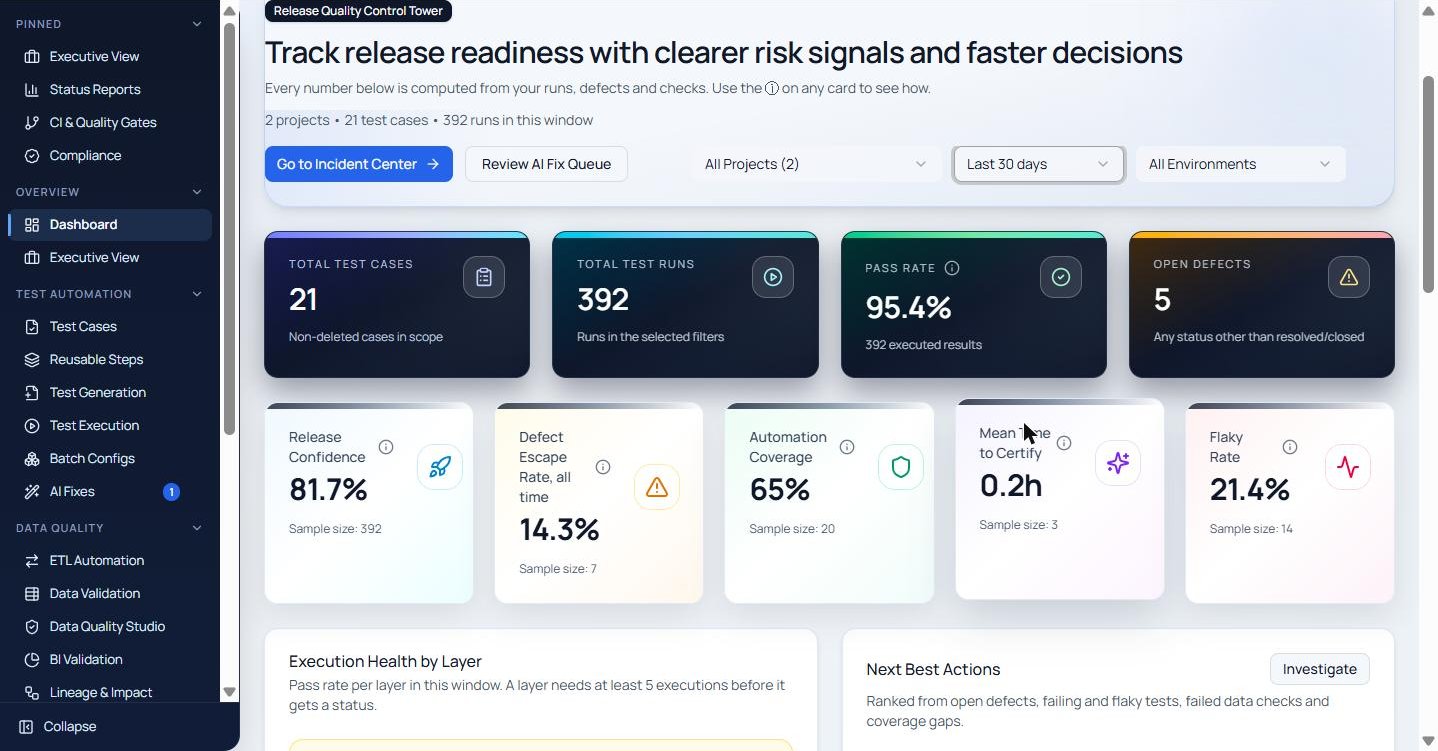
Every number explains itself
Pass rate, release confidence, flaky rate and automation coverage are computed from real runs, defects and checks, never typed in.
- Formula and sample size behind each card
- Health by layer: UI, API, data, BI and ETL
- Next best actions, ranked by impact
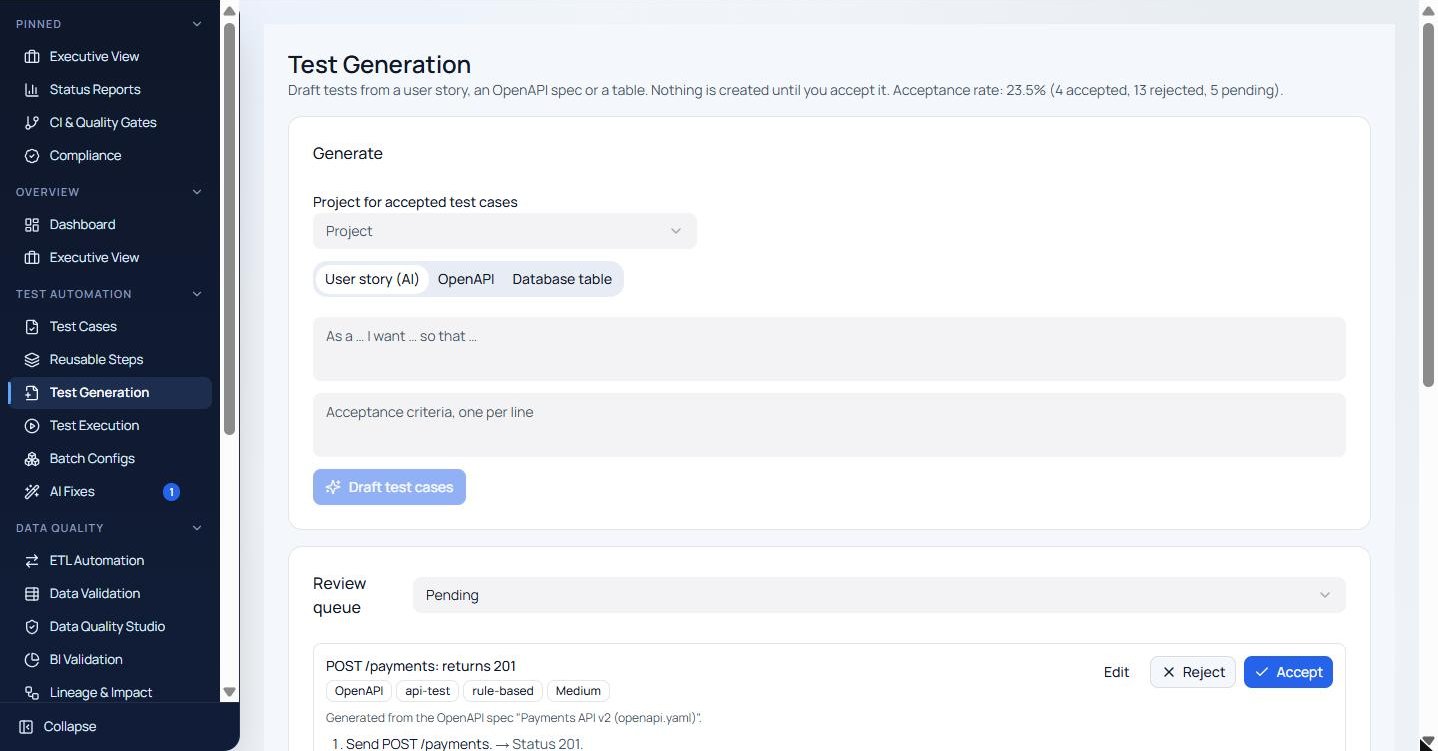
From requirement to test in minutes
Draft tests from three sources, then review them before anything is created.
- User stories: one test per acceptance criterion, plus edge cases
- OpenAPI specs: status, field and negative cases per operation
- Database tables: data quality rules from a live profile
- Drafts reuse your existing steps
Author once
Manual and automated test cases, suites and tags, with reusable steps that keep shared actions like sign-in in one place.
Real code, not lock-in
Tests generate as Selenium/TestNG Java or Playwright, editable in the built-in code editor and ready for your repository.
Run at scale
Parallel batches across browsers and environments, live logs and screenshots, and runner agents inside your network.
Broken tests repair themselves, with proof
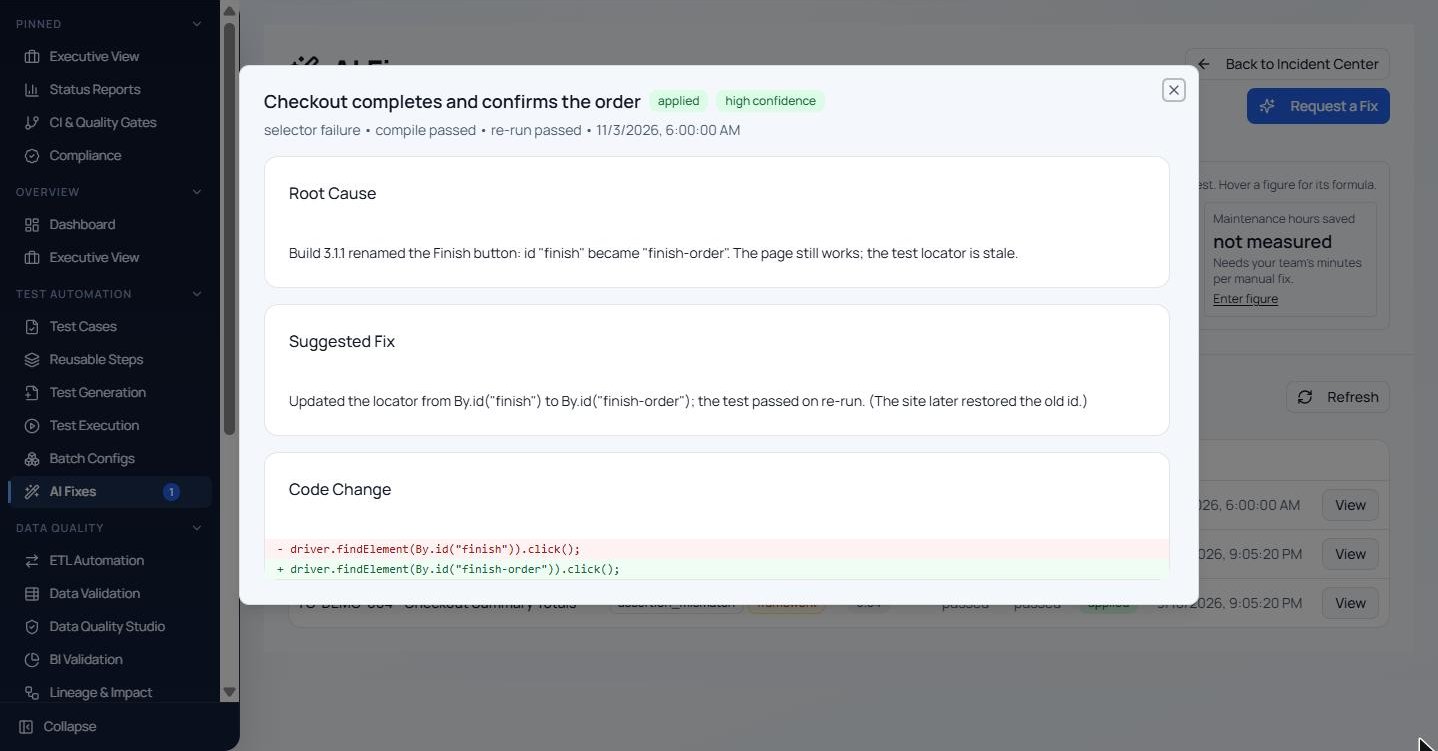
When a release changes the UI, Cubit finds the cause and proposes the fix.
- Root cause in plain language
- A code diff that compiles and re-runs
- Applied only after review
- Heal success rate tracked over time
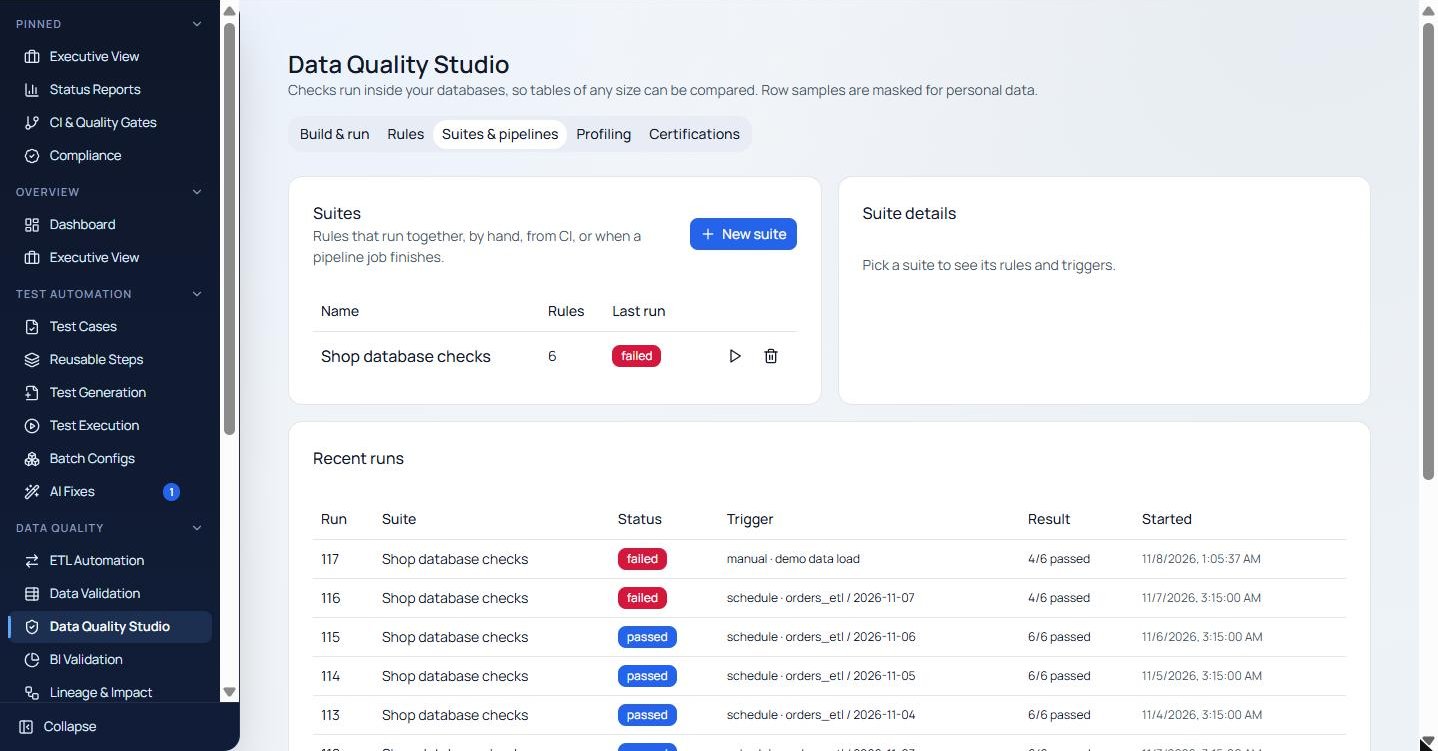
Checks run inside your database
Only counts, hashes and masked samples leave the database, so tables of any size can be validated.
- 10 rule templates, from nulls to SCD Type 2
- Row-by-row source vs. target reconcile
- Profiling with rule suggestions and dbt test import
- Suites run by hand, from CI or after each ETL load
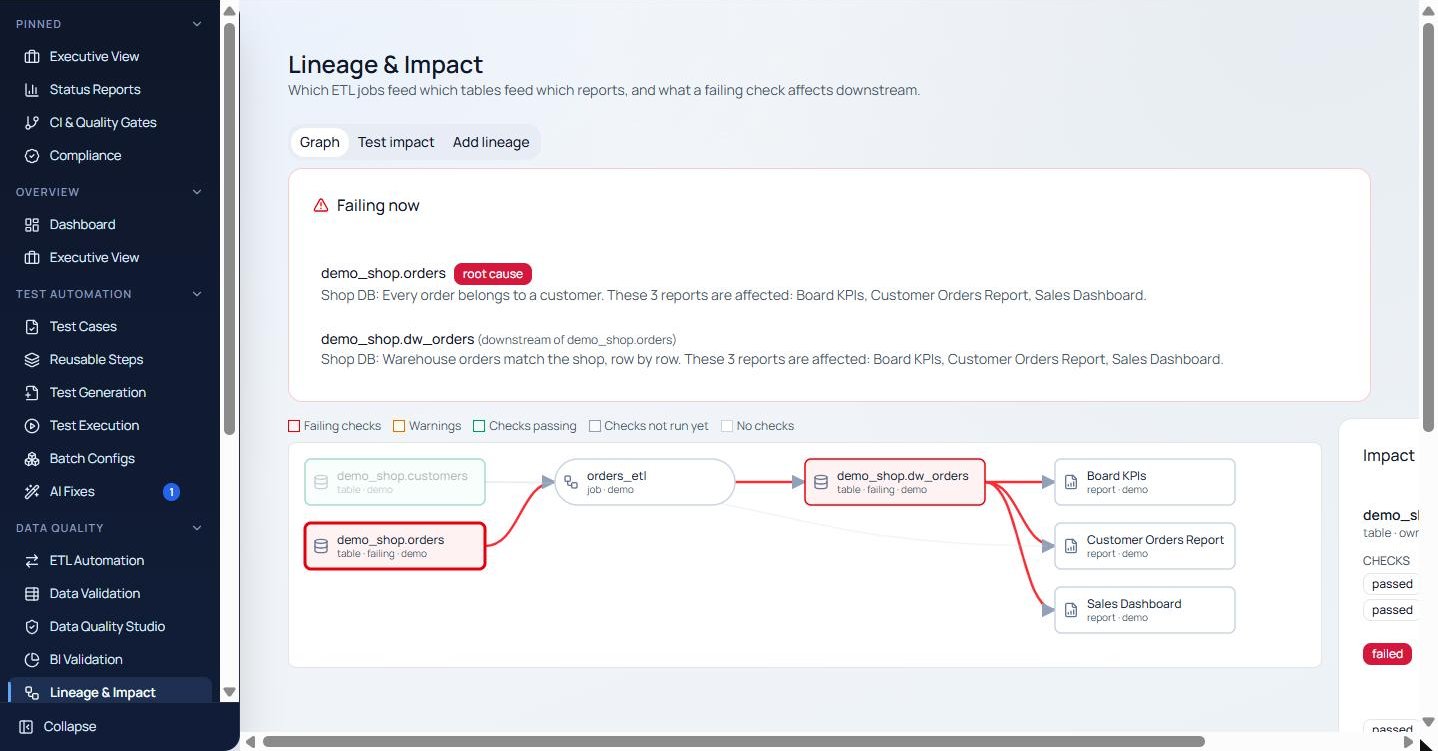
See which reports a bad table breaks
Cubit links tables, ETL jobs and BI reports, then traces every failing check to its root cause.
- Root cause marked on the graph
- Affected reports and their owners
- Inferred from your checks or imported from dbt
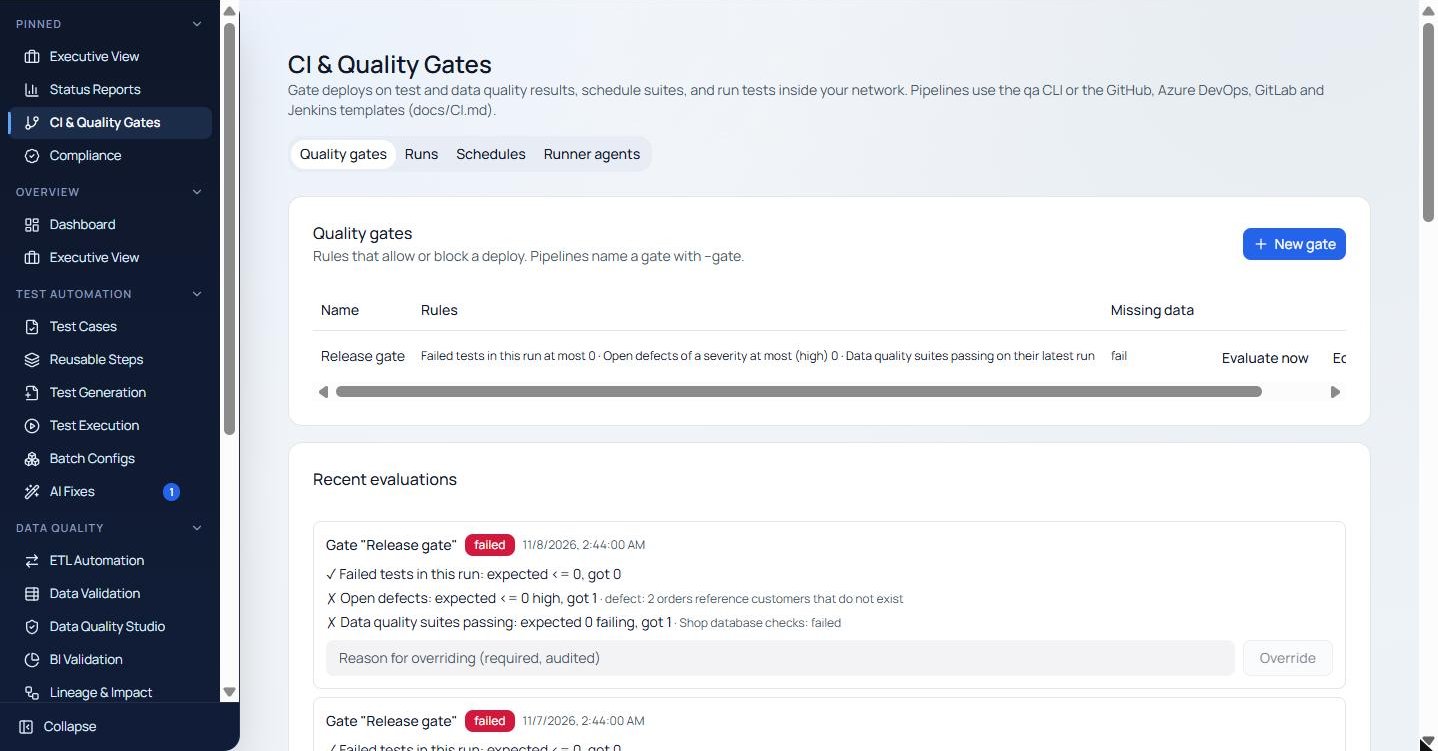
Block bad releases automatically
Gates combine test results, open defects and data quality into one allow-or-block decision in your pipeline.
- GitHub, Azure DevOps, GitLab and Jenkins templates
- Every failed rule says why
- Audited overrides with a reason
- Cron schedules and deploy triggers
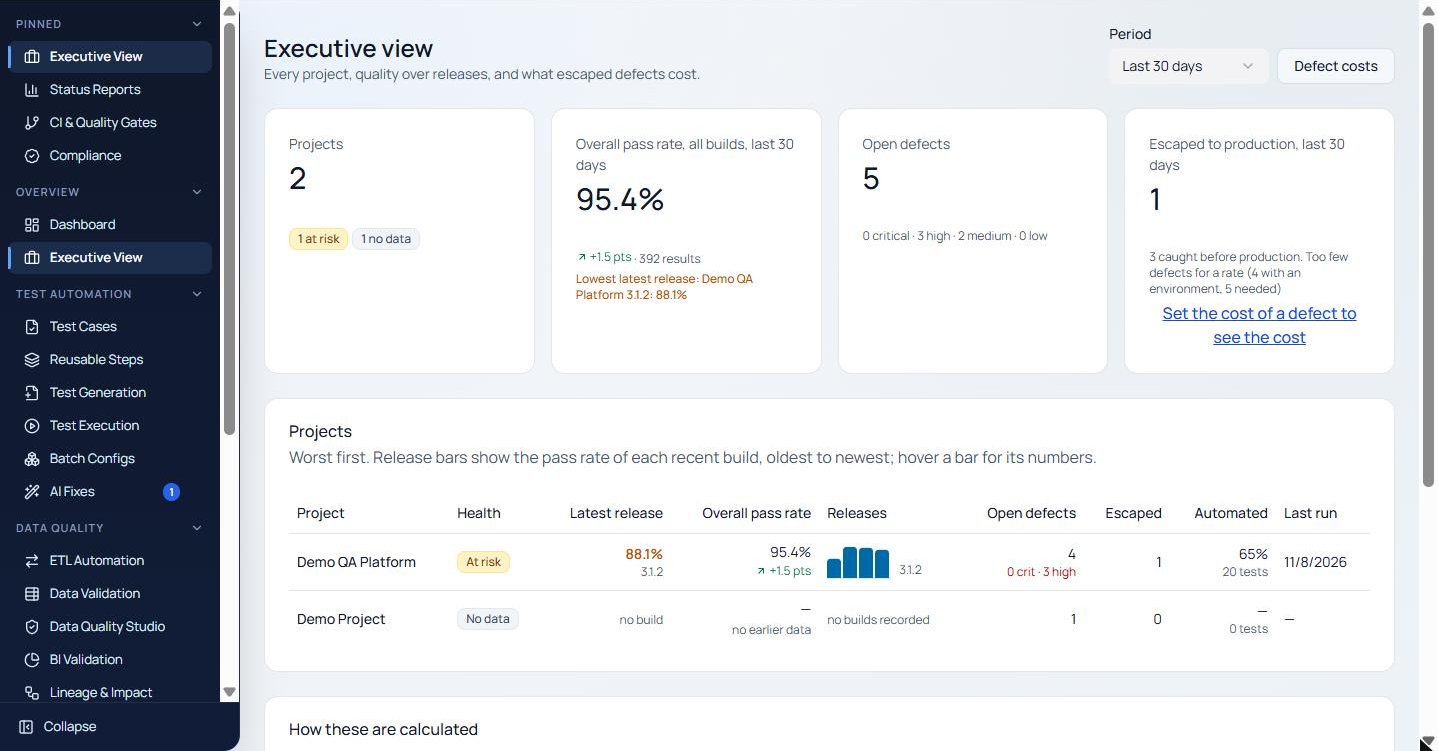
A go / no-go leaders can trust
Portfolio health, release-by-release pass rates and the cost of escaped defects on one page.
- AI-written readiness verdict, checked for invented numbers
- PDF and email-ready HTML reports
- BCBS 239, SOX and HIPAA control packs
- Append-only audit log
One engine for every layer
The same verification engine drives the UI, API, ETL and data checks behind the screens above.
From first connection to gated releases
Connect
Read-only database access, your apps and your CI. Profiles and starter checks run on day one.
Baseline
Import existing tests, generate the missing ones and map lineage to your reports.
Automate
Nightly schedules, runner agents and AI healing keep your suites green.
Gate
Quality gates in your pipeline and a readiness report for every release.
Bring one product line. We’ll show you its quality in a week.
Leave your work email and our engineers will set up a pilot: connect one application and its database, and see its test coverage, data issues and release readiness in Cubit.